

Site Sensitivity
At Robert Young Architects, we believe great design starts with a deep understanding of place. Whether we’re working along a coastal bluff or on a compact city lot, our first move is always to listen to the land, the climate, the neighborhood, and the client.
Site sensitivity isn’t just a design principle. It’s a mindset that guides everything we do, from form and orientation to material selection and construction strategy. It’s also the foundation of our approach to sustainability. Energy costs are rising, and environmental impact is increasingly top of mind. Rather than leaning on jargon, we aim to make sustainability tangible—helping our clients make informed decisions that benefit both the planet and their quality of life.
Our team brings expertise in LEED, Passive House, and other contemporary performance frameworks. But we’re not dogmatic. We treat these systems as toolkits—applying the ideas that make sense for the project’s climate, scope, and goals. That might mean optimizing solar orientation for a new-build in Montauk, or tuning mechanical systems and insulation upgrades in a renovation without invasive work. Always, it comes down to a common-sense, pragmatic response to context.

In Bridgehampton, we relocated the pool in an existing 1980s home for reasons that go beyond aesthetics. This move creates a microclimate around a new screened porch and sun deck that improves both comfort and energy performance.
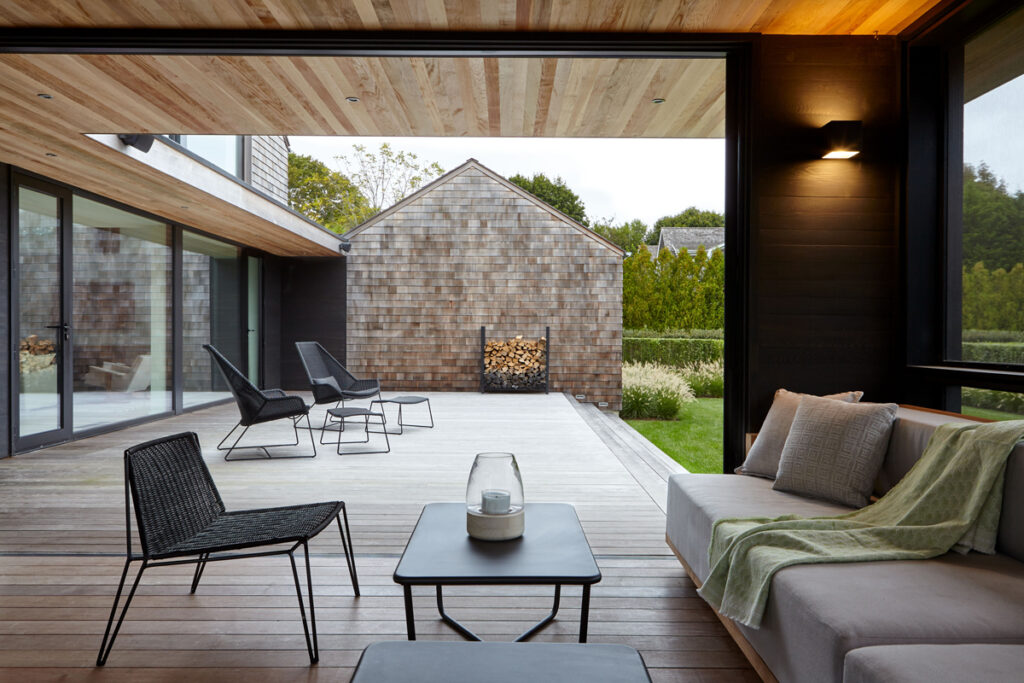
In Montauk, we embraced, rather than replaced, a uniquely zoned home perched on a bluff to minimize new visual disturbances to the neighborhood and celebrate an irreplaceable Atlantic view.

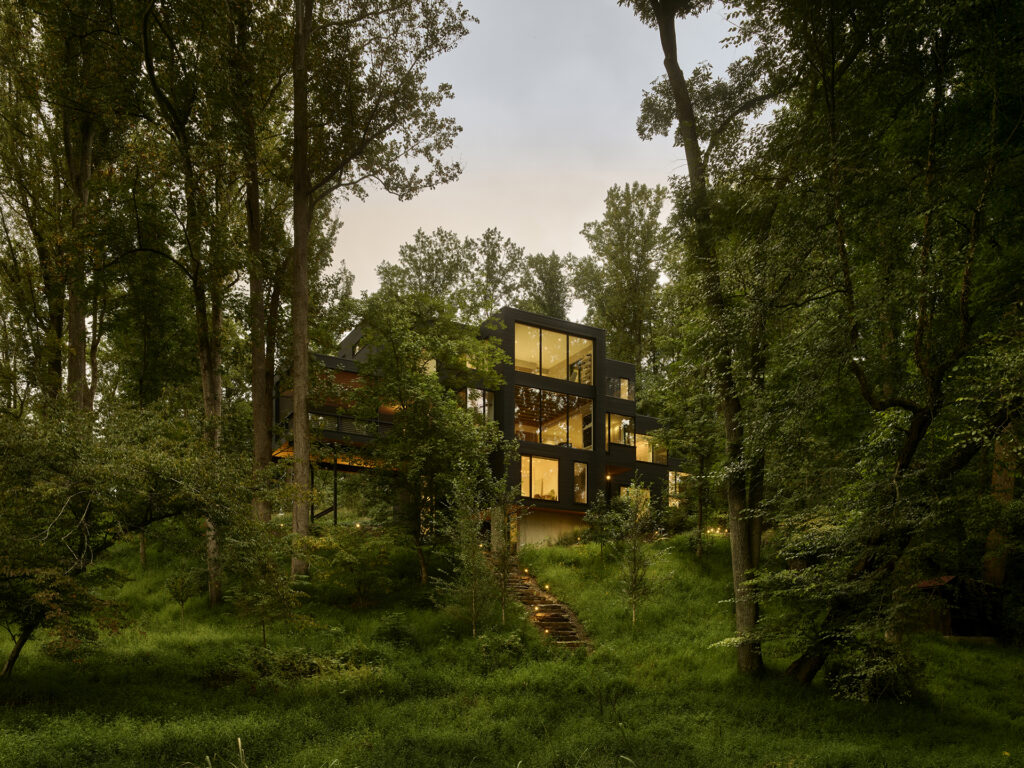
And in Virginia, our Tree House project’s footprint was guided by topography, not imposed on it—lifting the structure lightly on piers to preserve the forest floor.
We believe that architecture should always reflect its environment, climate, topography, culture, and community. And when done well, site-sensitive design doesn’t call attention to itself. It just feels right.